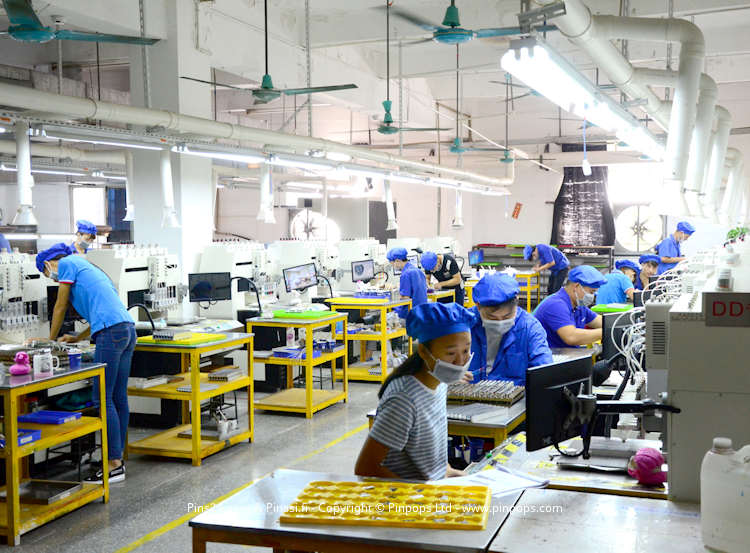
Every custom lapel pin we produce is manufactured through a controlled process designed for consistency, quality, and strict compliance. Our primary manufacturing facility in Dongguan is a state-of-the-art operation with decades of experience in high-end metalwork.
This facility is independently audited by some of the most recognized global brands, including Disney®, McDonald's®, Walmart®, and Sedex®. With a workforce of over 2,000 skilled professionals, the factory operates under strict Corporate Social Responsibility (CSR) guidelines. All materials are rigorously tested to ensure they meet CPSIA and RoHS safety and environmental standards.
We maintain active oversight of our production lines, including regular on-site visits to monitor quality benchmarks and ethical practices. This level of transparency ensures that every order meets the technical specifications and legal requirements expected by our corporate, institutional, and government clients across the United States.
While the heavy metalwork is handled by our audited partners, we manage the critical design and quality control stages. Every custom project starts with a structured digital proofing process to lock in your design. Once produced, each order undergoes a final inspection to ensure the finishing—whether it's custom enameling, plating, or laser engraving—matches your approved proof perfectly.
Clients often ask why high-quality custom metal pins aren't manufactured entirely within the U.S. at a lower price point. The reality lies in the specialized tooling and labor-intensive multi-step processes. In the domestic market, creating a single custom mold can cost hundreds or even thousands of dollars before a single pin is even struck.
By leveraging our audited international production capacity while maintaining domestic oversight and design control, we are able to provide fully custom-shaped, retail-quality lapel pins at a realistic price point—without compromising on ethical standards or material safety.
Overview of how custom metal lapel pins are produced
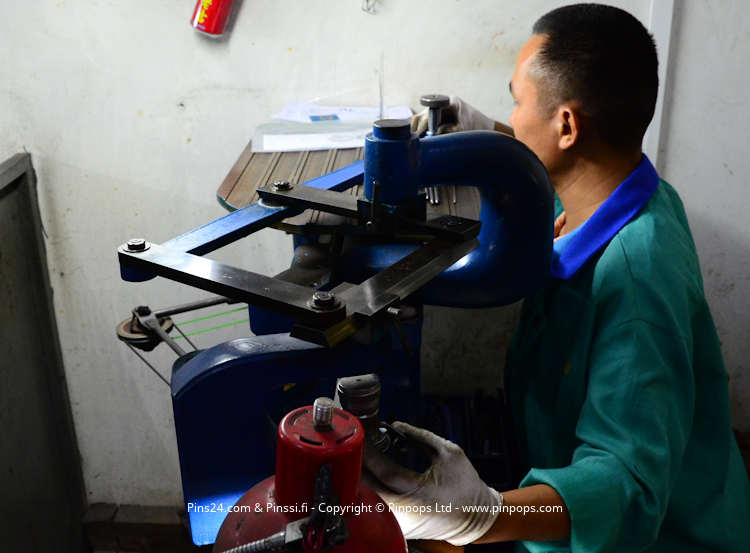
A custom production mold is created based on the approved design. The tooling forms a negative version of the artwork used for stamping or casting the pin.
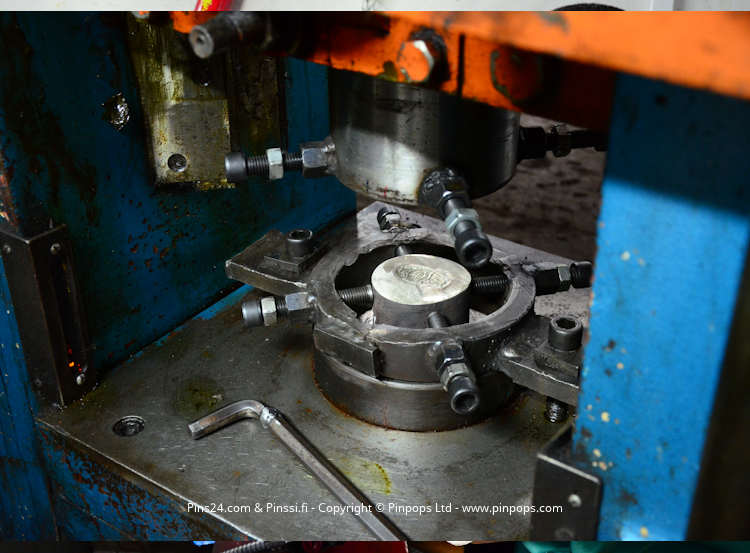
A hydraulic press is used to strike the metal against the mold, forming the pin shape and separating it from the metal sheet in a single controlled process.
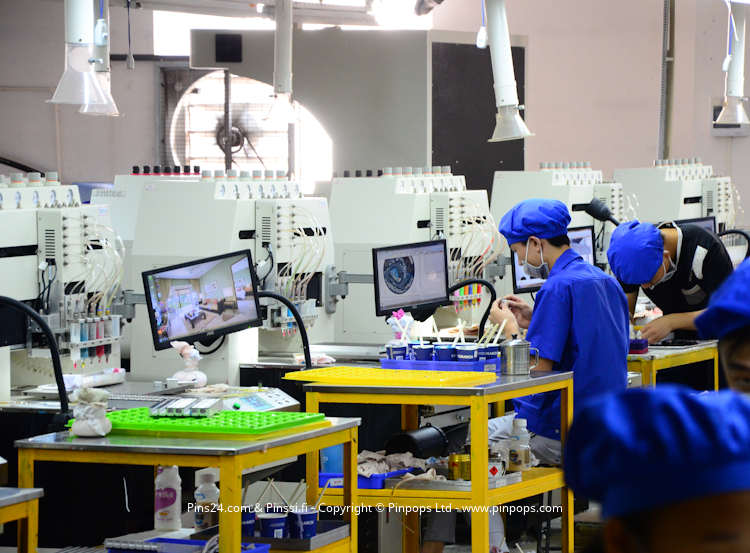
Once the metal base is complete, enamel colors or printed graphics are applied. This step may use automated equipment to ensure consistent color fill and detail.
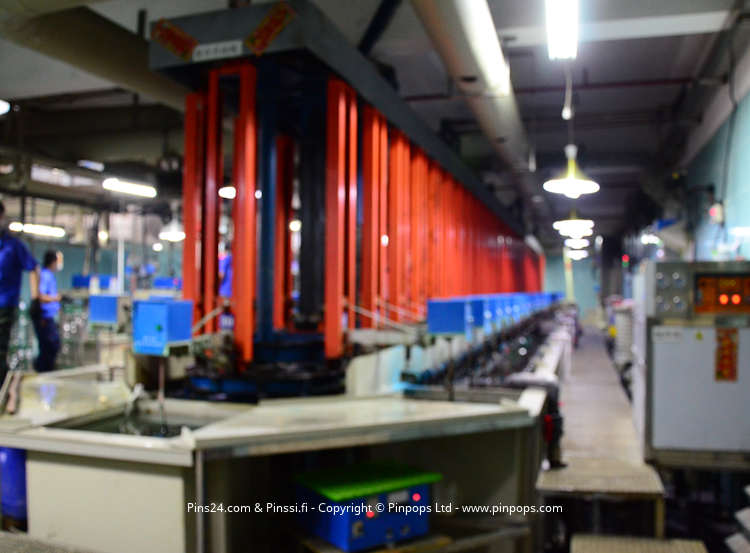
Pins are placed on dedicated racks and plated using a controlled electroplating process to achieve finishes such as gold, silver, or black nickel.
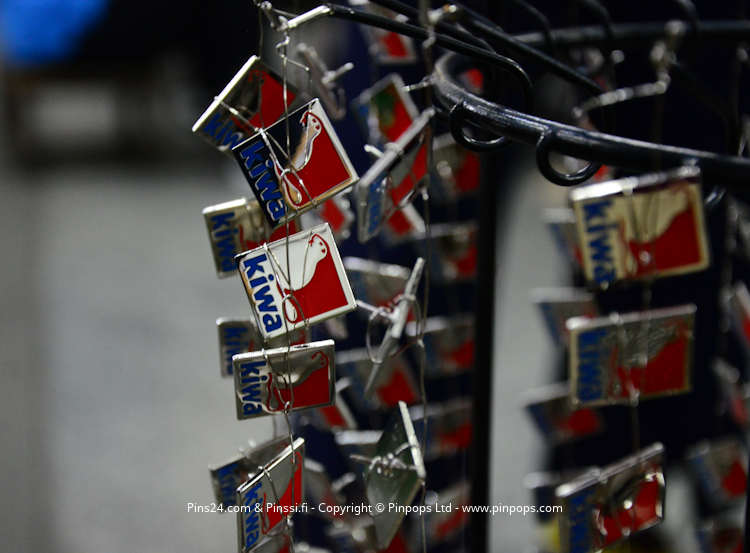
After plating, pins are removed from the racks, edges are smoothed, and surfaces are polished to achieve the final appearance and feel.
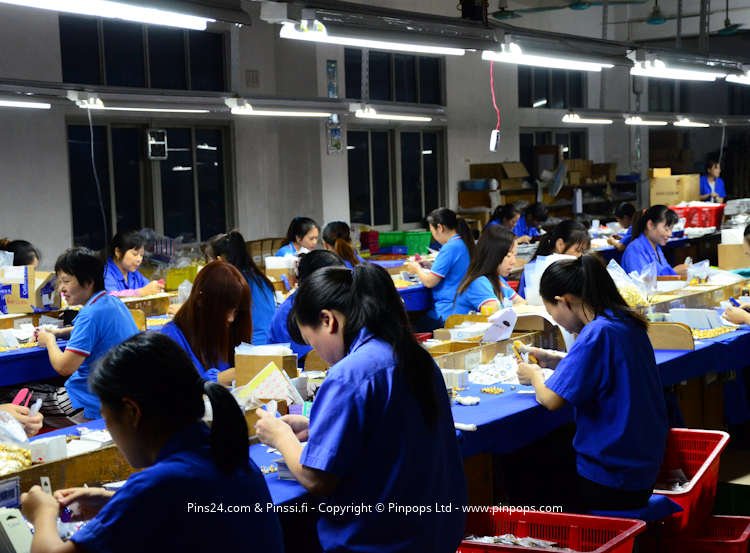
Each finished pin goes through a final inspection before being individually packaged, ensuring consistent quality across the entire order.
We’re proud to work with organizations of all sizes, from globally recognized brands to trusted regional and local institutions.